
Custom motorcycle accessories are more than add-ons—they’re a way to tell the world something about how you ride and who you are. Whether it’s a sculpted seat that hugs your spine on long miles, café-style clip-ons that scream “weekend racer,” or a set of weatherproof saddlebags that promise more road trips, the choices you make reflect your priorities: comfort, speed, practicality, or pure aesthetics. As a rider and accessory specialist, I’ve seen how small touches can transform a bike from “just transportation” into a personal statement.
Picking the right custom pieces also solves real-world problems: better ergonomics, smarter storage, and accessories built to survive vibration, UV, and rain. Below I’ll walk through how custom touches reveal your style, how to balance looks with comfort and safety, and practical tips for choosing durable gear—so your bike looks great and performs reliably, whether you commute daily or chase horizons on tour.
Before we dive in, think about three quick questions to guide every accessory decision: What kind of rides do you do most? Which compromises (weight, cost, convenience) are acceptable? And can the new part live with your bike’s mounting points, electronics, and ergonomics? Keep those in mind as we go through specifics.
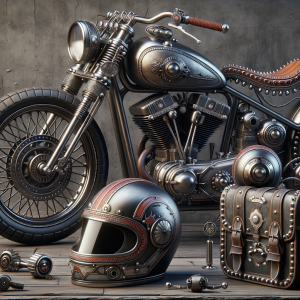
How Custom Accessories Show Your Riding Personality
Custom accessories are the equivalent of wardrobe choices for riders. A low-slung brown leather seat, brass-accented mirrors, and minimalist tail tidy send a vintage, café-racer vibe, while high-visibility accents, heated grips, and modular hard luggage say “commuter/tourer” with a safety-first twist. The accessories you pick tend to cluster around a theme: function-first riders prioritize mounting systems and storage capacity; style-forward riders chase finishes, lines, and color coordination.
Materials and finishes play a big role in the statement you make. Anodized aluminum or CNC-machined parts give a modern, precision look; distressed leather and brass fittings lean classic. Even technical specs—like choosing vibration-damping rubber mount mirrors vs. rigid alloy types—hint at what you value: long-distance comfort or track-ready feedback. These choices also interact with each other: a stripped-back tail combined with a plush aftermarket seat suggests someone who values looks but refuses to sacrifice comfort entirely.
Real-world situations reinforce personality through performance. A rider who picks a tall windscreen and heated grips is signaling long commutes or winter trips; one who fits bar-end mirrors and rearsets is likely carving backroads. Observing what riders actually use—how often they stop to rearrange luggage, whether they adjust mirror angles mid-ride—gives honest insight into what accessories mean in practice, not just on the showroom floor.
Balancing Style with Comfort, Safety, and Fit
Style should never fully override ergonomics and safety. A beautiful low-profile seat is useless if it puts your hips too far back and causes numbness after 30 miles. When customizing, measure reach (handlebars to seat), knee bend at full lock, and footpeg position. Small shifts in handlebar height or seat foam density can transform a gorgeous but impractical setup into one you’ll actually live with on long rides.
Technical details matter: foam type (memory, gel, closed-cell) affects pressure distribution; cover materials determine UV and water resistance; mounting hardware needs correct grade fasteners and the right torque specs. Also consider weight distribution—heavy luggage mounted high or rearward changes handling and suspension preload. Integrate accessory choices with basic motorcycle setup: adjust fork preload, rear shock sag, and tire pressures after adding racks, panniers, or a heavier seat.
Safety integration is key. If you add custom mirrors, ensure they meet field-of-view needs; aftermarket windshields should not funnel turbulence into your helmet; aftermarket exhausts must avoid altering heat flow toward bags or levers. Practical tips: test new ergonomics on short rides, carry a small toolkit for on-the-road tweaks, and always verify that electrical accessories (USB ports, heated grips) are compatible with your charging system to avoid drained batteries or blown fuses.
Practical Tips for Choosing Durable Custom Gear
Durability starts with materials and finishes. Look for stainless steel or marine-grade hardware in coastal areas, UV-stable plastics and fabrics for sunny climates, and sealed zippers or roll-top closures for luggage meant for touring. For seats, seek high-density foam cores with a waterproof base and abrasion-resistant covers; for metal parts, corrosion-resistant coatings and proper thread-locking on fasteners make a big difference over time.
Pay attention to mounting methods and vibration resistance. Bolt-on brackets with multiple mounts are preferable to single-point clamps; rubber isolators or silicone grommets reduce fatigue-related failures on mirrors and footpegs. Electrical accessories should use soldered or crimped connectors and be routed away from hot exhausts and pinch points—heat shrink and dielectric grease are inexpensive, effective protections. When you install, follow torque specs and recheck fasteners after the first 100 miles.
Avoid common mistakes: buying purely for looks without checking fit or compatibility; trusting cheap knockoffs with unknown alloys and poor thread tolerances; overloading racks beyond their rated capacity. Practical shopping tips: read user reviews focused on long-term use, verify return policies and warranties, and if possible, test-mount items at a shop or event. For commuting vs. touring, prioritize quick-release mounting and modularity—being able to remove saddlebags or a tank bag in minutes is worth the small extra cost.
Custom motorcycle accessories are a powerful shorthand for who you are as a rider—your priorities, your routes, and your sense of style. Choose pieces that marry the look you want with materials and mounting methods that stand up to the road. A smart, durable setup not only looks great on the driveway but makes every mile more comfortable and reliable.
Final tip: start with one meaningful upgrade—seat, handlebars, or luggage—ride with it for a season, then iterate. Your bike (and your backside) will thank you, and you’ll have a clearer sense of which custom choices truly reflect your riding personality.