
Smart motorcycle accessories do more than make your bike look high-tech — they help you stay alive and enjoy the ride. As an experienced rider and accessories specialist, I’ve seen how the right gadgets cut down on fiddling, head-swinging, and indecision that steal your focus. This article walks through why smart tech matters, which devices actually reduce distractions, and practical buying and setup tips so your tech helps, not hinders.
Common smart accessories that keep riders focused include helmet HUDs and Bluetooth comm systems, TPMS and blind-spot sensors, and weatherproof smartphone mounts with wireless charging. Think of them as a well-trained passenger: they pass along only the useful information and keep you hands-on, eyes-forward, and in control.
Read on for real-world advice — what works on a wet commute at 6 a.m., a weekend twisty run, and a multi-day tour — plus the setup mistakes I see riders make and how to avoid them.
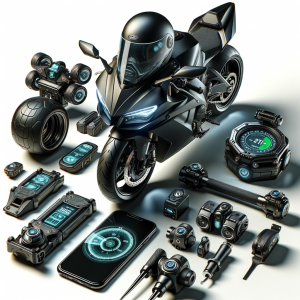
Why Smart Accessories Improve Rider Focus and Safety
Smart accessories reduce the two main types of distraction: visual (looking away to check a device) and manual (taking a hand off the controls). A helmet HUD that projects turn-by-turn arrows onto your peripheral vision, or a handlebar controller that cycles through navigation prompts with a thumb, keeps your gaze and hands where they belong. That small shift in where you place attention greatly decreases reaction time when traffic or road hazards demand it.
These devices also cut cognitive load by filtering information. Instead of an array of beeps and screens, a well-integrated setup gives prioritized, contextual alerts — tire pressure warnings, a blind-spot chime only when you signal, or a single vibration when someone calls. Haptic feedback and short, confirmatory voice prompts are excellent because they require almost no conscious processing; you get the message, respond, and go back to riding.
Finally, smart accessories make routine maintenance and monitoring less of a distraction factor. TPMS and battery monitors eliminate surprise stops; GPS trackers and eCall systems add security without requiring constant checking. The technology doesn’t replace your riding judgment, but it preserves your mental bandwidth for the things that matter: traffic, traction, and the road ahead.
Top Smart Accessories That Reduce Distractions
Helmet HUDs and modern smart helmets are top-tier for keeping eyes up. A HUD that displays navigation, speed, and incoming-call alerts in your line of sight prevents repeated glances down at a phone. Complement these with a quality Bluetooth communication system (Bluetooth 5.0 or better) that supports voice commands and noise-cancelling mics — you’ll handle calls, music, and nav prompts hands-free, with low latency and clear audio even at highway speeds.
Tire pressure monitoring systems (TPMS), blind-spot detection sensors, and camera-based smart mirrors address safety without asking for attention. TPMS sensors typically screw onto valve stems or clip inside rims; many run on coin-cell batteries for a season or two and transmit via RF to a handlebar display. Blind-spot radar modules give simple LED or vibration alerts when vehicles enter your lane; they’re especially useful in heavy commuter traffic where shoulder checks are frequent and hectic.
Don’t overlook mounting and control hardware that reduces fiddling. Bar-mounted, lockable phone mounts with wireless charging keep your route visible when stopped and auto-dim while moving; dedicated handlebar controllers let you toggle music and navigation without hunting for buttons. Add a compact GPS tracker or eCall module for emergency support and a thermostatic heated-grip system for comfort — fewer shivers and less need to stop and warm up means better focus on the journey.
Practical Tips for Buying and Setting Up Tech
Start with compatibility and durability: check helmet shell and visor space for HUDs, clamp diameter for bar mounts, and Bluetooth profiles for intercoms (HFP, A2DP, AVRCP). Look for IP67 or better for waterproofing, and prioritize devices with solid vibration resistance — rubber-damped mounts, stainless-steel clamps, or adhesive pads formulated for motorcycles. A good battery life spec (6–10 hours for comms, multi-season for tire sensors) and easy firmware updates are must-haves.
Mounting and placement make or break usefulness. Use vibration-damping spacers for camera and HUD mounts, torque handlebar clamps to manufacturer specs, and avoid stick-on mounts on oily or textured surfaces. Place alarms and sensors where they won’t be knocked by luggage, and angle cameras/mirrors for the natural head position rather than forcing you to look. Before a long ride, do a short test loop to tune sensor sensitivity and voice-command phrases so you only get meaningful alerts.
Common mistakes are either buying too much tech at once or skimping on build quality. Don’t stack six different alert systems that all beep for the same thing — pick a prioritized setup (HUD + TPMS + one blind-spot sensor is plenty). Avoid cheap clones with vague IP ratings or poor Bluetooth stacks; they save money now and create distractions later with dropouts and pairing hassles. Practical buying tips: read long-term user reviews, confirm return/warranty terms, and always carry a small toolkit and spare batteries or a charger on multi-day trips.
Smart motorcycle accessories are about making your ride smoother, safer, and more enjoyable by taking nonessential work off your shoulders so you can focus on the road. Start small: choose one or two core items (HUD or comms, plus TPMS), install them properly, and test them on short runs. With the right mix — durable mounts, waterproof ratings, and sensible alerts — tech becomes an invisible co-rider that keeps you present and in control. Ride smart, stay focused, and don’t forget to enjoy the view while your accessories handle the rest.