
First deer, cold dawn, first light through the pines—and you nick the gut a little too deep on a messy quartering shot. Blood on your gloves, rain coming in sideways, and that cheap, slick-handled knife you grabbed in a hurry is doing everything but help. If you’ve ever stood in the woods wishing your knife felt like an extension of your hand instead of a hazard, you know why a proper handle matters. Enter the Maxam stainless handle: simple, tough, and the kind of grip that won’t let you down when hands are numb, wet, or bloody.
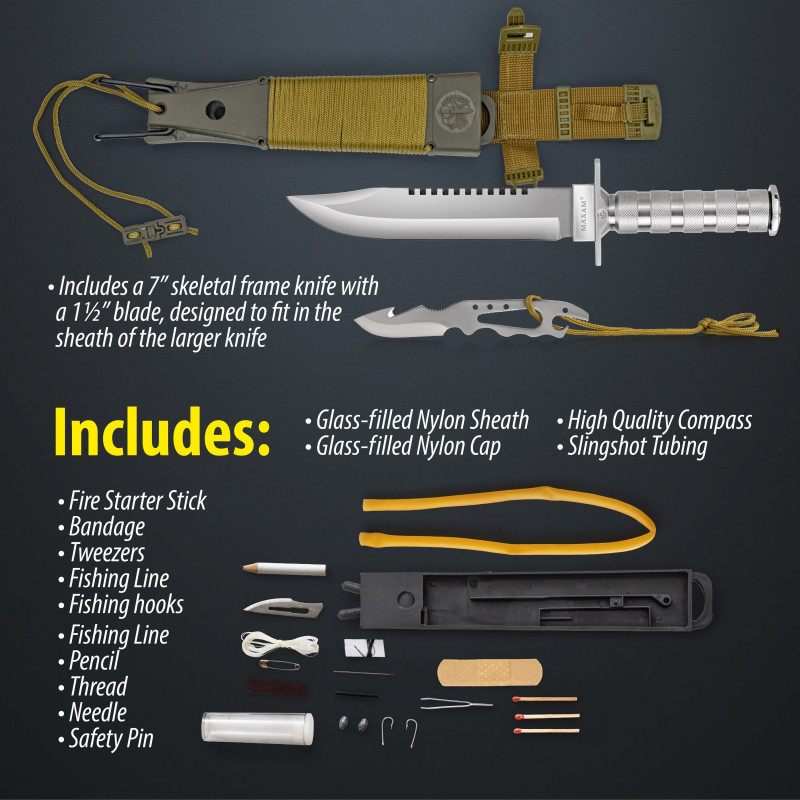
A hunter’s take: Maxam stainless handle in rain
I’ve put Maxam-handled knives through a lot—mud, bone, brute-force caping, and more rainy gut jobs than I care to count—and the stainless handle keeps earning its keep. Stainless isn’t just about corrosion resistance; when bead-blasted or patterned right, it gives a tactile feel that actually helps you keep purchase without needing rubber or fancy coatings. In wet conditions the handle doesn’t swell, peel, or turn into a soap bar the way some cheap polymers do, and that confidence saves time and keeps you safer when you’re working against the clock.
From a practical standpoint, a stainless handle on an affordable Maxam skinning or caping knife gives you predictable balance. That balance matters when you’re making delicate cuts—preserving hide for taxidermy or getting a clean seam for caping. Maxam’s simple, straight-to-the-point handles pair well with blade profiles like drop-point or short-curved skinners, so you get control whether you’re slicing through muscle or breaking connective tissue. And yes, that gut hook you can get for under $15? It pairs perfectly with a solid stainless-handled blade for quick, clean openings without stabbing into the cavity.
You don’t need a $200 custom to get reliability. What you do need is a tool that stays functional after a week of camp work. Maxam kits and camo fixed blades are often outfitted with bead-blast or satin finishes that hide scratches and reduce glare—useful when the forecast says drizzle and you’ve got a second tag to fill. For hunters who want value and performance, a stainless handle is low-maintenance: wipe, rinse, and sharpen. That’s the kind of real-world promise you can bank on at deer camp.
Blade, handle, and kit breakdown (quick, plain-language)
- Blade steel: Many Maxam hunting knives use steels similar to 8Cr18MoV—stainless with decent edge retention and very forgiving to sharpen. Expect easy sharpening in camp and respectable hardness for field tasks.
- Blade shapes & features: Look for drop-point and short curvature for skinning, and a reliable gut hook for opening cavities without nicking offal. Fixed blades remain the workhorse in the field; folders are fine for light work but aren’t my first pick for heavy caping.
- Handle materials & finishes: Stainless handles won’t absorb blood or swell, and bead-blast textures give grip in wet conditions. Camo coatings hide wear; rubberized grips are tacky but can wear out or collect grit.
- Sheaths & sets: Nylon sheaths are cheap and functional, but leather or molded Kydex-style cases offer better retention and quick-access on a belt. Maxam game cleaning kits and two-piece sets are a good match for hunters on a budget.
Field-tested grip tips for wet, bloody hunting days
When your hands are slick, the way you hold the knife becomes everything. Start with a simple choke-up: position your hand so the blade’s balance sits just behind your knuckles; that extra control reduces knife wobble and gives more precise slices when skinning a shoulder or neck. Use the spine for controlled pressure—think of it as a guide rather than brute force. If the handle has subtle texturing (like bead-blast stainless), keep your grip light-to-medium; squeezing hard on a slick handle increases the chance of slippage and fatigue.
Gut hooks are one of those cheap upgrades that actually make you faster and cleaner. To use a gut hook effectively:
- Place the hook at the initial incision point, lift slightly, and pull toward you in a steady motion—don’t saw.
- Let the hook do the cutting; it’s designed to slice the skin without risking internal contamination.
- If you’re working in low light, make the first cut shallow and controlled; visibility improves with a steady, practiced motion.
Pair your gut hook with a good, stainless-handled skinner and you’ll avoid the ragged tearing that dull blades cause. Dull knives don’t just slow you down—they cause torn meat and ruined hides. Keep a compact sharpener in your pack; rods and diamond stones are camp-friendly and quick to use between animals.
Safety and technique in cold, dim conditions can’t be overstated. Wear liners or gloves that let you feel the handle—thin nitrile over wool liners works well when it’s wet and cold. When the light’s poor, lean into deliberate, slower cuts rather than trying to rush. And if you drop a knife? Don’t try to catch it. Recover it safely and reassess your stance before proceeding. I’ve seen too many close calls from trying to save five seconds. Practical kit choices help: a belt sheath that sits forward for quick access, and a minimalist game cleaning case keep everything organized when the weather turns ugly.
Common mistakes and quick fixes (so you don’t learn the hard way)
- Using a big Bowie or overly stiff blade for gutting: choose the right tool for the job—small, nimble skinners win.
- Skipping the sharpener: a few strokes on a rod between animals keeps edges working and meat clean.
- Squeezing the handle like a stress ball: too tight equals slips; use controlled pressure.
- Neglecting sheath placement: practice drawing your knife in the jacket you actually wear in the stand.
If you take one thing back to camp from this, make it this rule: pair a sharp blade with a handle you can trust in wet conditions—practice a couple controlled gut-hook pulls and a basic skinning cut at home until they’re second nature. A Maxam stainless-handled blade gives you that reliable traction and low fuss maintenance without breaking the bank—so you can focus on the hunt, not on fixing tools. Now pack your kit, sharpen your edge, and get out there—fill that tag and bring it home clean.