
Knives are indispensable tools in our daily lives, whether you’re prepping meals in the kitchen, tackling outdoor adventures, or managing everyday tasks. A sharp knife is not just a pleasure to use—it’s safer and more efficient. But here’s the kicker: sharpening your knife too often or too aggressively can actually do more harm than good. Over-sharpening slowly dulls and damages your blade, transforming what should be a trusty tool into a frustrating, worn-out piece of metal. In this article, we’ll explore why over-sharpening isn’t the quick fix it seems to be, delve into the science behind how your knife’s edge suffers, and offer practical tips to keep your blade sharp and healthy for the long haul.
Why Over-Sharpening Wears Down Your Knife’s Edge Fast
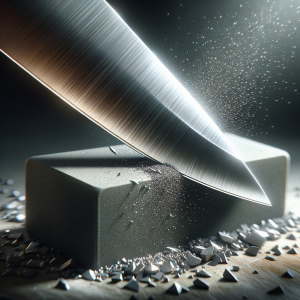
Every time you sharpen a knife, you’re essentially grinding away a tiny layer of steel from the blade. While a fresh edge is nice, removing too much metal too frequently means you’re slowly eating away the blade’s integrity. Think of it like sanding a wooden table: a little sanding smooths things out, but too much and you thin the surface until it’s fragile and uneven. The same principle applies to your knife’s edge. Over-sharpening can cause your blade to lose its original shape and thickness, weakening the edge and reducing its lifespan.
Another subtle but serious consequence of over-sharpening is the change in edge geometry. Knives have specific bevel angles—often ranging from 15° to 25° per side depending on their purpose—and these angles are optimized for cutting performance and durability. When you sharpen too often or at inconsistent angles, you risk altering that geometry. The edge becomes thinner and more acute, which might feel sharper at first but also makes it more prone to chipping, rolling, and dulling faster during use. A well-maintained angle is key to a lasting, effective edge.
Finally, over-sharpening can accelerate corrosion and structural damage. Sharpening removes not only metal but also the hardening layer created during heat treatment—this hardened outer layer (often measured on the Rockwell Hardness scale) is what helps the edge resist wear and rust. When you repeatedly strip away this layer, you expose softer metal underneath, making your knife more vulnerable to nicks, rust spots, and general degradation. So, over-sharpening isn’t just a cosmetic issue—it actively compromises the blade’s toughness and longevity.
The Science Behind Blade Damage and Edge Dulling
At the heart of your knife’s performance is metallurgy—how the steel is composed and treated. Most high-quality knives are made from stainless or carbon steels that undergo heat treatment to achieve a balance of hardness and flexibility. The hardness (often between HRC 56-62) ensures the edge stays sharp longer, while flexibility prevents it from snapping under pressure. Sharpening abrades this hardened surface to form a new edge, but if done excessively, it peels away the protective “skin” of hardened steel.
The microscopic structure of your knife’s edge also plays a role. When you sharpen, you’re creating a wedge that tapers down to a fine line. However, this line isn’t infinitely thin—there’s a limit determined by the steel’s grain size and toughness. Over-sharpening can reduce the edge thickness below this limit, causing the edge to become brittle and prone to “edge rolling” where the tip bends or folds instead of breaking cleanly. This type of damage is subtle but cumulative, leading to dullness even if the blade looks sharp to the naked eye.
Another factor is heat generated during sharpening. Improper technique or using coarse stones aggressively can increase friction and heat, which risks altering the steel’s microstructure. Overheating your blade during sharpening can reduce hardness and cause tempering damage, making the edge less durable. This is why maintaining proper sharpening technique with light pressure and consistent water or oil lubrication matters—too much heat and abrasion won’t just dull your knife; it’ll degrade the steel beneath the surface.
Sharpening your knife is an essential part of maintenance, but like with many good things, moderation is key. Over-sharpening slowly wears down your edge, alters its geometry, and chips away at the very steel that keeps it strong and sharp. By understanding the science behind blade damage and practicing smart sharpening habits—like maintaining proper angles, sharpening only when necessary, and using quality stones—you can extend the life of your knife and enjoy its performance for years to come. Remember, a sharp knife is a happy knife, but an over-sharpened one? Well, that’s just a dull disappointment in disguise. Keep those blades honed, but don’t overdo it!