
If you’ve ever shifted position mid-ride because your hand cramped trying to reach a phone mount or felt your bike squirm under a heavy top case, you already know accessory placement matters. Motorcycle accessories—tank bags, windshields, phone mounts, luggage systems, mirrors, and crash bars—don’t just sit on the bike; they change how the bike behaves and how your body feels. Small moves in where and how you mount gear can transform a tiring commute into an easy ride or turn a comfortable tour into an annoying chore.
As someone who’s fitted gear for everything from commuter scooters to long-haul tourers, I’ve seen the same mistakes over and over: accessories bolted where they’re convenient, not where they’re effective; phone mounts that vibrate into uselessness; weight piled high and forward without a thought. This article breaks down why placement affects comfort and control, the ergonomics and mechanical side of mounting, and practical placement tips you can apply today. Think of this as a checklist and a little friendly coaching to help your next ride feel better from the first mile to the last.
Let’s get practical—no torque-wrench sorcery required—so you can make smarter choices about where to put that toolkit, camera, or windscreen. Read on for straightforward advice, a few technical pointers explained plainly, and real-world tips that work whether you ride to work, weekend jaunts, or cross-country trips.
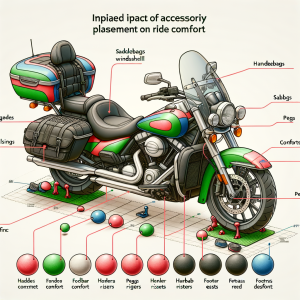
Why Accessory Placement Changes Comfort and Control
Accessories alter the bike’s center of gravity and how forces are transferred through the frame and suspension. A heavy top case or poorly placed tail bag raises the center of mass, increasing pitch and making the bike more sensitive to crosswinds and braking. Conversely, low-mounted panniers or a compact tank bag keep weight closer to the chassis where the suspension can do its job, producing a more stable, comfortable ride.
Beyond raw weight, where you mount things affects feedback through the controls and rider positioning. Mirrors and phone mounts that sit too far out force unnatural reach or constant readjustment, leading to shoulder and wrist fatigue. Handlebar-mounted accessories can change leverage and steering feel; adding heft at the bar amplifies vibration and can dull or exaggerate steering inputs, both of which reduce rider confidence and comfort on longer rides.
Finally, accessories interact with vibration, wind, and weather in predictable ways. A stiff, poorly damped phone mount will buzz and make the screen unreadable; a too-tall windshield may funnel turbulence into your helmet. Knowing how those interactions change with placement allows you to minimize discomfort—choose vibration-damping mounts, position wind protection to smooth airflow rather than shift turbulence, and keep frequently used items within easy reach.
Ergonomics and Weight: How Mounting Affects Ride
Your body is part of the motorcycle’s dynamics. Where you reach, grip, and brace creates load paths through your arms, back, and hips. Accessories that alter reach—like extended mirrors, oversized windshields that push your torso forward, or bars moved by mounted electronics—can cause you to shift weight or hold tension, which cumulative fatigue makes worse over long rides. Ergonomic mounting prioritizes neutral posture and minimizes repetitive strain.
Weight distribution isn’t just a numbers game; it changes suspension sag and geometry. Move a 6–10 lb duffel from the tail to the tank and the bike’s steering can go from lazy to lively as rake and trail subtly change under load. That’s why manufacturers spec luggage limits and why aftermarket racks and subframes often include load-path design to keep weight where the frame expects it. Use lighter materials (aluminum, TPU fabrics) and modular systems to keep mass low and centered when you can.
Mounting method matters too: bolting directly to the frame vs. clamp-on mounts, rubber-isolated vs. rigid fasteners, and quick-release systems each have trade-offs. Rigid mounts give rock-solid stability but can transmit vibration and shock into the accessory (and your hands). Rubber-damped or elastomer-isolated mounts reduce vibration but may allow small movements—ideal for electronics. Match the mount to the accessory’s function: secure luggage with frame-mounted racks, and prefer isolated mounts for GPS/phone holders.
Practical Placement Tips for Comfort and Safety
Start with a dry run: load gear as you plan to ride and take a short loop to feel changes. If the bike pulls, wobbles, or you find yourself shifting weight to compensate, stop and move items lower or nearer the centerline. For touring, place heavier items closest to the bike’s center of gravity—behind the seat but low—reserve top cases for lighter, quick-access items like rain gear or a helmet lock.
Phone and GPS mounts should be within your natural line of sight without forcing you to hold your head or shoulders tense. Prefer clamp-on mounts that attach to the handlebar close to the bar’s center; use vibration-damping adapters and check that charging cables don’t snag. Mirrors and controls should never be obstructed by accessories—if a tank bag or camera rig blocks sightlines or reach, remount it elsewhere.
Avoid common mistakes: overloading the tail, stacking soft luggage without compression straps, and using adhesive mounts in high-vibration zones. Secure all mounts with proper torque, thread locker where appropriate, and secondary safety ties for critical items. For commuting, prioritize easy access and weatherproofing; for long trips, prioritize balance and durability—think metal racks and soft, well-compressed panniers rather than bulky, top-heavy trunk boxes.
Accessory placement is one of those small adjustments that pays huge comfort dividends on day rides and multi-day tours alike. Keep weight low and centered, put frequently used items in easy reach, and choose mounting methods that match the accessory’s need for rigidity or isolation. Do a quick test ride after any change—your muscles will tell you faster than a spec sheet.
A final tip: treat accessories like a wardrobe—pack and position according to the ride. Tune placement for the trip, not just for how things look parked in your garage. Ride well, and enjoy every mile with less fuss and more comfort.