
Comfort matters more than aesthetics once the miles add up. You don’t need to tear down forks or swap springs to make your bike civilized for commuting, touring, or long weekend rides—small, smart accessory and setup changes can transform your experience. As someone who’s swapped seats at the side of a motel parking lot and taught ergonomics clinics at track days, I’ve learned which mods give the biggest comfort return without touching suspension.
Start with a checklist: seat and padding, rider interface (bars, pegs, controls), and how wind and luggage affect your posture. These three areas control how your body loads the motorcycle more than spring rates do. The tips below are practical, material-aware, and easy to test on a short ride—no workshop full of spring compressors required.
If you’re used to “fixing it with suspension,” relax: addressing pressure distribution, reach, vibration damping, and aerodynamics will reduce fatigue and increase control immediately. Read on for specific swaps, set-up tips, common mistakes to avoid, and how to choose components that last in real-world weather and road conditions.
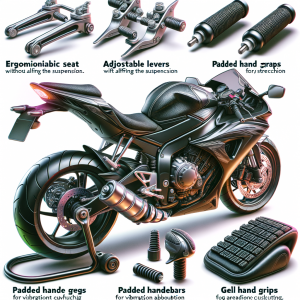
Swap Seats, Gel Pads and Foam for Softer Ride
A bad seat transmits every bump directly into your sit bones; a well-chosen seat redistributes pressure across a larger area. Start by trying a simple gel pad or thin memory-foam topper—these are cheap, reversible, and can be secured with straps or a non-slip cover. Look for closed-cell gels and quality foam covers that resist compression set; very soft memory foam can bottom out on big hits, so try medium-density products first.
If you want a more permanent upgrade, consider replacing the seat’s foam or buying an aftermarket seat with dual-density foam. Dual-density foam gives a firmer base layer for support and a softer top layer where you sit, preserving support over long miles. Check the seat pan and mounting points for compatibility—many aftermarket seats use the stock pan pattern but confirm bolt locations and clearance around the fuel tank and subframe before buying.
Seat covers and materials matter for temperature and durability. Vinyl is cheap and weatherproof but traps heat; leather breathes better but needs care. Sheepskin covers wick moisture and reduce friction on long rides, while waterproof seams and UV-resistant covers extend life for bikes parked outdoors. When installing, torque the seat bolts properly and test ride to see if padding compresses more than expected—re-pad or swap thickness until you get even pressure and less forward shifting on acceleration.
Upgrade Ergonomics: Footpegs, Bars and Controls
Footpeg and handlebar position set your posture, and small changes here can eliminate lower-back and wrist pain more effectively than softer forks. Adjustable footpegs (or simple peg relocation brackets) let you find a neutral knee angle—too tucked or too stretched both create fatigue. For daily commuting, slightly forward pegs on cruisers reduce hip fold; for sport-touring, a mid-position that lets you stand on pegs occasionally is ideal.
Handlebars and controls should put your elbows slightly bent and shoulders relaxed. Bar risers, different bars with more pullback, or rotating clip-ons can adjust reach without altering suspension. Pay attention to bar diameter: common sizes are 7/8" (22mm) for many bikes and 1 1/8" (28mm) for handlebars that sit in risers—use the right clamps or step-down kits to fit grips and controls properly. Don’t forget lever reach adjusters so smaller hands can maintain two-finger braking and clutch control comfortably.
Comfort also comes from dampening vibration at the contact points. Swap to gel or cushioned grips and add bar-end weights designed for vibration damping—these change the resonant frequency of the handlebars and reduce numbness. Consider throttle locks or cruise devices for long highway stretches to prevent constant throttle tension. When installing new parts, check wiring clearance, cable length, and switch housing fit to avoid unexpected binding or rubbing during full lock turns.
Tame Wind, Vibration and Load: Shields and Bags
Windblast and poorly balanced luggage make you fight the bike and hunch forward; a properly chosen windshield and luggage system keeps you relaxed and reduces neck strain. Adjustable or modular windshields let you fine-tune height until the air streams over your helmet, not into your chin or chest. For touring, a medium-to-large touring screen typically places the airflow at forehead level, while urban riders might prefer a small flyscreen to reduce buffeting and keep low profile.
Vibration can be addressed with a combination of bar-end weights, rubber-mount accessories, and flexible mounting systems for luggage. Hard luggage should be mounted with solid racks but keep heavier items low and centered to maintain handling. Soft bags are forgiving and easier to compress into tight spaces, but use compression straps to prevent load shift. Remember: rear-heavy setups amplify pitch on bumps; distribute weight—tools and camping gear—between tank bags, panniers, and low-profile top cases.
Common mistakes include going straight to the biggest windshield (which can create worse turbulence) and overloading a subframe or tail without upgrading mounts. Measure bag capacities against your bike’s payload limit, secure soft bags to tie points, and use quick-release mounts that lock—loose or flapping bags are not just annoying, they’re dangerous. Finally, maintain and inspect mounting bolts, weather seals, and soft-bag straps regularly—salt, UV, and vibration wear fast on these items in everyday use.
You don’t need to touch the forks to gain a more comfortable ride; seat choices, ergonomic adjustments, and sensible wind and luggage management usually deliver the biggest payoff per dollar and hour of labor. Start with temporary, reversible fixes (gel pads, adjustable pegs, a small windshield) and test ride—comfort is personal and best tuned on the road. A final practical tip: keep a short log of changes and how each ride felt—your best setup is the one you’ve tested and can repeat. Safe miles and enjoy the ride with less fatigue and more control.